
SRN - World News

Hungary’s Magyar vows to probe alleged misconduct by Orbán’s government

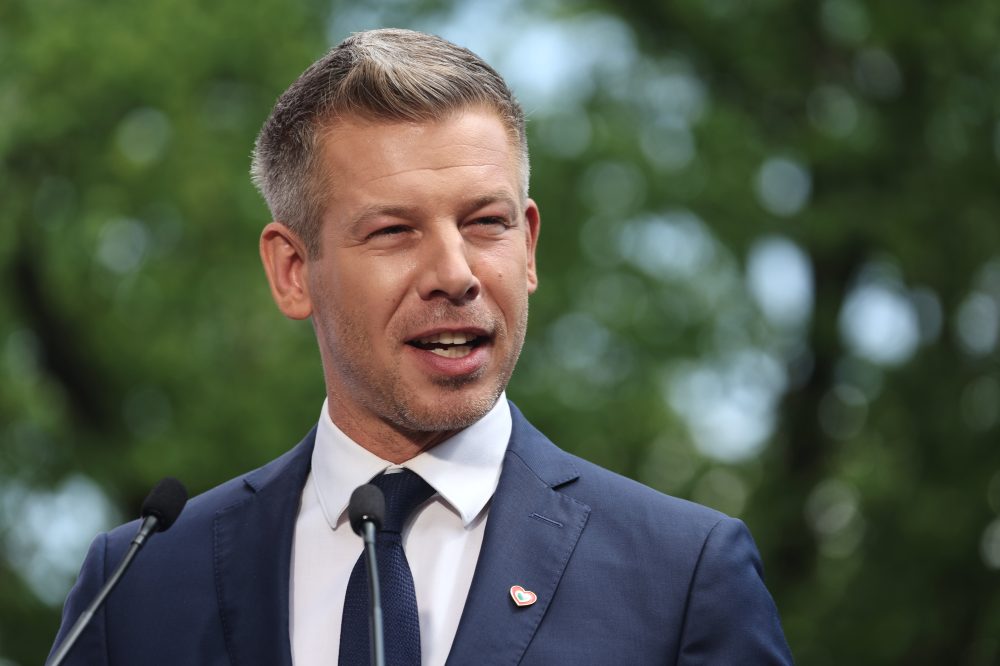
BUDAPEST, Hungary (AP) — Hungarian Prime Minister Péter Magyar told lawmakers on Tuesday his party’s majority in Parliament will form investigative committees to look into alleged corruption and abuses of power by Viktor Orbán and his previous government.

Magyar and his center-right Tisza party defeated the autocratic leader in a landslide election last month. The win, which gave Tisza a two-thirds majority, allows it to roll back many of the policies that gave Orbán a reputation among his critics as a far-right authoritarian.

Among Tisza’s biggest campaign promises was holding Orbán, his nationalist-populist Fidesz party and their allied business elites accountable for alleged misconduct.

Magyar said Tuesday six parliamentary investigative committees will be set up to examine a number of issues from Orbán’s tenure, including the suspected misappropriation of public funds managed by Hungary’s National Bank, a case currently under police investigation that potentially involves hundreds of millions of dollars.

“We will put all corruption and abuses of power on full display,” Magyar said. “The Hungarian people have the right to know who benefited from their money, who stole their money, who got rich from the vulnerability of the people.”

During his 16 years as Hungary’s prime minister, Orbán was accused by many critics of overseeing the widespread misuse of public funds, including through funneling lucrative state contracts to family members and a group of business figures allied with his party.

He was also accused of using state power to erode democratic institutions, leading the European Parliament in 2022 to declare Hungary no longer a democracy.

Since taking their offices earlier this month, lawmakers from Magyar’s party have submitted a constitutional amendment that would limit prime ministers to eight years in office, a restriction that would apply to Magyar. Orbán, who served four consecutive terms, wouldn’t be able to serve as prime minister again.

On Tuesday, Magyar said his government would also look into enforcing the eight-year limit on other elected offices, adding: “No one should imagine that electoral authority is inherited forever. Power exercised without limits leads to loss of control over time in any democratic system.”

Magyar said the task of another investigative committee will be to look into the details of a pardon issued to an accomplice in a child sexual abuse case by Hungary’s former president, Katalin Novák, which led to her resignation in 2024.

The new premier has also pledged to pass a constitutional amendment that will dissolve Hungary’s Sovereignty Protection Office, an authority created by Orbán’s government in 2023 tasked with investigating non-governmental organizations, media outlets and political parties in the name of preventing foreign influence.

Magyar also vowed his government would eliminate “political privileges” previously enjoyed by officeholders, including reducing salaries for the prime minister and cabinet members, executives at state companies, and lawmakers.


Brought to you by www.srnnews.com


Hong Kong proposes issuing 10,000 permits for drivers on ride-hailing apps like Uber

HONG KONG (AP) — The Hong Kong government on Tuesday proposed issuing 10,000 new vehicle permits for drivers to work for online ride-hailing services like Uber, less than half the amount that industry representatives were hoping for.

Hong Kong has about 18,000 licensed taxis and caps private service car-hire permits at 1,500, and these drivers can be summoned through ride-hailing apps. But the additional drivers who operate through those apps technically are outside the law and in the past have faced arrest, though they are prevalent in the city.

The Hong Kong government unveiled details of a regulatory framework last summer to bring the industry under formal regulation, following years of pressure from taxi companies.

Smart Transportation Alliance, whose members include ride-hailing firms and other transportation companies, had proposed in May that 20,500 new car permits be allowed in an initial phase.

But in a document submitted Tuesday to the legislature, Hong Kong’s Transport and Logistics Bureau said a cap of 10,000 would be prudent and appropriate, balancing the needs of passengers and public road resources. It said it would review the ceiling later to see if it needed adjustment.

The city’s lawmakers last year passed a bill to require licenses and permits for online ride-hailing platforms, along with their vehicles and drivers. In granting a license, Hong Kong’s transport commissioner can consider the firm’s experience, financial capacity and intended investments in the region. Licensed companies will need to maintain “proper and efficient” services.

Drivers must be at least 21, have a drivers license for at least a year and have no serious traffic convictions over the past five years. They also need to pass a test.

Under Tuesday’s proposals, most of the new ride-hailing regulations would become effective in August, with the rest going into effect by August 2027. By then, all platforms will need to be licensed and ensure that all vehicles and drivers attached to them have permits.

The companies will have to use technology — such as face-recognition software — to make sure that drivers are indeed the owners of the vehicles they are using, according to the proposals.

Police have previously arrested some Uber drivers suspected of driving without a permit and in 2018, more than two dozen drivers were fined.

Some taxi drivers have long resisted online platforms like Uber, seeing them as rivals that threaten their businesses. But Uber, which started operating in Hong Kong in 2014, remains popular in the Asian financial hub, where many residents are frustrated with what they describe as poor taxi services. Uber began including licensed taxi drivers on its platform in recent years.

In a previous document submitted to the legislature, Uber’s Hong Kong team has argued it has over 30,000 active drivers in the city over the past year. It said that even if 15,000 permits are issued and enforced, waiting times for a booking during certain periods may double compared to current levels, and that fares could rise by as much as 70%.

It said in a statement Tuesday that the legislative proposal was an important step toward establishing clear regulations, but that the initial quota is “significantly lower” than what is needed to meet riders’ demand. It said more than 20,000 people also would lose an opportunity to earn under the proposals.

“This legislation is just a start. We hope to continue working closely with the government on an efficient allocation framework and a practical review mechanism that allows the system to evolve over time,” it said.


Brought to you by www.srnnews.com

Israel’s Elbit developing hardware to combat Hezbollah drones, CEO says

By Steven Scheer

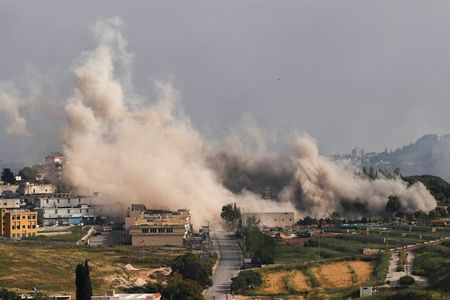
JERUSALEM, May 26 (Reuters) – Israel’s largest defence contractor is developing hardware to combat explosive Hezbollah drones that have killed Israeli troops in southern Lebanon, including through the potential use of laser-based defence systems, its CEO told Reuters on Tuesday. 

Iran-backed Hezbollah has used the cheap, easy-to-assemble kamikaze drones to attack Israeli troops which have remained in southern Lebanon since an April 16 truce. Difficult for air defences to thwart, the drones are also being used to deadly effect in the Russia-Ukraine conflict. 

Under pressure to address the threat, Prime Minister Benjamin Netanyahu pledged on Monday to escalate attacks on Hezbollah in Lebanon. But he did not spell out a plan to address the drones, which can evade Israel’s high-tech jamming technologies. 

ELBIT DEVELOPING HARDWARE TO ADDRESS DRONES, CEO SAYS

In an interview, Bezhalel Machlis, chief executive of Elbit Systems , said the defence giant was actively working with the Israeli defence ministry to develop a quick solution to the drone challenge. 

He said that could involve an “energy weapon solution,” adding that the company is “very active in energy weapons such as lasers”.

“There are other means, which are also relevant to this threat. We are heavily involved in the development of a solution (to) this challenge” of explosive drones, Machlis said after Elbit reported big gains in first-quarter revenue and profit. Its Nasdaq-listed shares rose 8% in morning trade. 

Israel has been using low-tech solutions like nets to stop the First-Person-View drones, controlled with fiber-optic cables, from hitting troops. 

The Israel-Hezbollah conflict has been the deadliest spillover of the broader U.S.-Israel war on Iran, where hopes faded on Tuesday for an imminent end to the conflict after the U.S. conducted strikes in the country’s south. 

Iran insists that any deal to end the war should include an end to Israeli attacks in Lebanon. Netanyahu has demanded the right to continue to strike anywhere in the region to address perceived threats. 

On Tuesday, Hezbollah said its fighters used explosive drones and rocket fire against Israeli forces advancing toward the southern Lebanese town of Zawtar al-Sharqiya, describing it as a response to Israeli strikes on Lebanese villages. 

The drones and the Israeli defence industry’s involvement in developing technology to address them comes amid a rise in Israeli defence exports, with demand for Israeli military tech such as munitions, laser and electronic warfare systems and night-vision systems up sharply since the start of the Gaza war in 2023. 

Machlis said Elbit was seeing rising demand in Europe, the U.S., and the Asia-Pacific, as well as from the United Arab Emirates. 

“We are active in this region,” Machlis said of Elbit’s Middle East business. “It is fast growing.”

(Reporting by Steven Scheer; Additional reporting by Jana Choukeir in Dubai; editing by Rami Ayyub and Sharon Singleton)


Brought to you by www.srnnews.com

Israel expands ground operation beyond demarcation line in south Lebanon as clashes intensify

By Jana Choukeir

May 26 (Reuters) – The Israeli military has expanded its ground operations in southern Lebanon beyond a demarcation line that Israel set up several kilometres inside Lebanese territory after an April 16 ceasefire with Hezbollah, two sources said on Tuesday.

The sources gave no further details on the extent of the advance beyond the so-called “Yellow Line”.

The line, separate from the U.N.-demarcated “Blue Line” marking the frontier between Lebanon and Israel after Israel’s withdrawal in 2000, forms part of a proposed buffer zone extending 5 km to 10 km (3 miles to 6 miles) into southern Lebanon, where Israeli troops continue to operate in dozens of largely abandoned villages.

An Israeli military official said the military was “operating in a targeted manner beyond the Forward Defense Line in order to remove direct threats to the citizens of the State of Israel” and Israeli soldiers “in accordance with the directives of the political echelon.”

Israeli Prime Minister Benjamin Netanyahu said on Monday Israel would intensify strikes against Hezbollah, while a U.S. official said the Iran-backed group had ignored warnings to halt attacks that risked undermining negotiations to end the U.S.-Israeli war on Iran.

Hezbollah said on Tuesday it had targeted Israeli forces advancing toward the southern Lebanese town of Zawtar al-Sharqiya with explosive drones, rockets and artillery, while the Israeli military struck several towns in southern Lebanon and the Bekaa Valley and issued new evacuation warnings.

Lebanon’s health ministry says the cumulative toll from the Israeli offensive since March 2 had reached 3,213 dead and 9,737 wounded by May 26, while the Israeli military says Hezbollah has launched explosive drones toward Israeli troops and northern Israeli towns, killing at least 11 soldiers since the ceasefire.

The World Health Organization has said at least 608 people in Lebanon have been killed in Israeli attacks since the truce.

Hezbollah has not released figures for its own casualties.

(Reporting by Jana Choukeir and Maya Gebeily, additional reporting by the Jerusalem bureau; Editing by Kevin Liffey and Sharon Singleton)


Brought to you by www.srnnews.com

EU queries Czech PM’s moves to tackle conflicts of interest

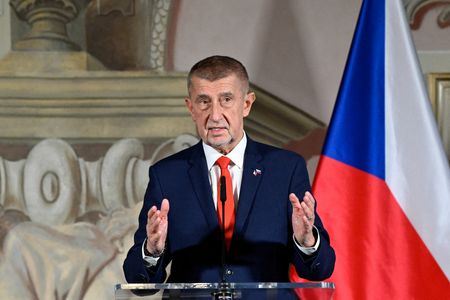
PRAGUE, May 26 (Reuters) – The European Commission has asked the Czech government for information on arrangements designed to prevent conflicts of interest over EU subsidies linked to companies in the business empire of Prime Minister Andrej Babis, a Commission spokesperson said on Tuesday.

Czech Radio’s iRozhlas.cz and Czech news site Seznam Zpravy earlier reported the Commission was seeking further analysis of a plan to shift Babis’ shares in Czech conglomerate Agrofert into a special trust.    

The Commission’s Directorate-General for Regional and Urban Policy also wants assurances that companies linked to Babis but outside the trust – including an investment fund operating dozens of fertility clinics across Europe – are not receiving EU funds, according to iRozhlas.cz.

Babis told Czech news agency CTK he had fulfilled laws.

“I resolved the alleged conflict of interest far beyond the scope of Czech and European laws,” he was cited as saying.

“I do not own Agrofert and I will not get my shares back until the end of my life, I do not benefit from it either, and this will apply even when I am no longer in politics.”

A Commission spokesperson told a briefing that a letter had been sent on May 20, without providing further details.

“We are in contact with the Czech authorities to seek information on what measures are in place to avoid the conflict of interest,” the spokesperson said, adding there were regular controls to protect EU financial interests.

‘STILL NEED TO BE CLARIFIED’

Seznam Zpravy reported the Commission advised Czech authorities not to seek reimbursement from the EU budget for any subsidy payments to the businesses concerned until the issue is resolved. The Commission spokesperson declined to comment.

The government office and development ministry did not respond to questions.

Billionaire Babis controls a vast company in food, agriculture and chemicals that has received hundreds of millions of euros in EU farm and other subsidies. Czech courts and EU institutions previously ruled that Babis was in a conflict of interest when he was prime minister from 2017 to 2021.

Before returning to office, Babis said in December he would move Agrofert into an independently governed trust.

Some Czech authorities have ruled the trust structure complies with regulations. A Czech ministry sent a letter to the Commission in March outlining its position.

The response fell short, according to the latest letter sent by Hugo Sobral, a deputy director-general at the Commission, who wrote “some matters still need to be clarified”, according to iRozhlas.cz.

Any EU refusal to reimburse subsidies would leave costs to be covered by the Czech state budget.

(Reporting by Jason Hovet, additional reporting by Jan Lopatka in Prague and Inti Landauro in Brussels; Editing by Mark Potter and Gus Trompiz)


Brought to you by www.srnnews.com


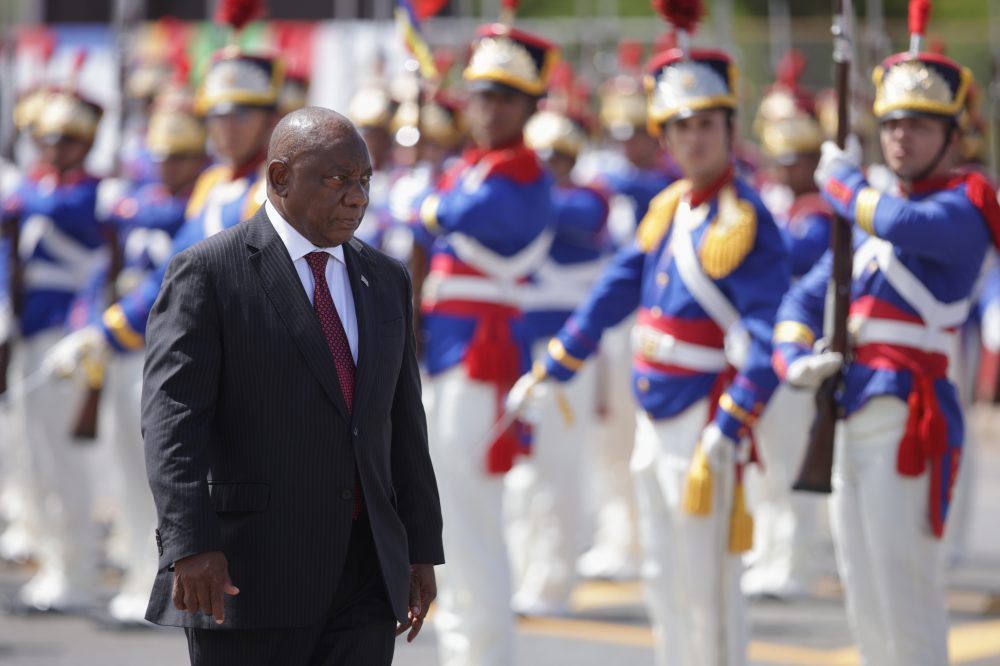
Why a scandal involving money in a couch has South Africa’s president facing possible impeachment

CAPE TOWN, South Africa (AP) — The leader of Africa’s most developed economy faces impeachment proceedings over a scandal from years ago involving around $580,000 in cash that was stashed in a sofa at his game farm and then stolen.

South African President Cyril Ramaphosa has been accused of misconduct over the source of the money and attempting to cover up the theft in 2020 using his personal security team so as to hide its existence. He has denied wrongdoing.

Here’s what to know about the “Farmgate” scandal and why impeachment proceedings against Ramaphosa have been revived years later.

The scandal first broke in 2022 when a former head of South Africa’s state security agency walked into a police station, revealed the theft and accused Ramaphosa of money laundering and other offenses. The theft at Ramaphosa’s Phala Phala ranch happened in February 2020, a year after Ramaphosa won an election, but wasn’t publicly known.

After the revelations, Ramaphosa acknowledged that the theft happened, but denied wrongdoing, saying he reported it at the time to the head of his police protection unit.

Ramaphosa said that the $580,000 in U.S. banknotes that was taken from the couch was from the legitimate sale of buffaloes at his ranch. He said the money was put under the cushions of a sofa in a spare bedroom in his private residence at the farm by a staff member who was concerned that other workers had access to a safe.

Ramaphosa was a wealthy businessman before becoming president and is known for his love of livestock and game breeding.

An independent panel appointed by Parliament investigated and issued a report saying there was initial evidence of serious misconduct by Ramaphosa, including that the theft wasn’t properly reported, the source of the money was unclear and the amount might have been much more than Ramaphosa claimed.

Ramaphosa also allegedly drew on his contacts with the then president of neighboring Namibia to help discreetly track down a suspect in the theft who had fled there, according to the report. It recommended a full investigation.

Ramaphosa survived an initial vote in Parliament over the scandal in late 2022 when his African National Congress party — which had a majority at the time — voted to reject the panel report, stopping any impeachment process.

However, two opposition parties filed a case at South Africa’s top Constitutional Court, arguing that the evidence of the panel report should have triggered an impeachment committee to be formed to fully investigate if Ramaphosa was guilty of misconduct and should face an impeachment vote.

The court ruled this month in favor of the opposition parties, saying the 2022 vote by Parliament didn’t follow procedure and should be set aside, reviving the scandal and the possibility of impeachment.

Parliament has said that it will form an impeachment committee to fully investigate.

Ramaphosa has said he won’t resign and filed his own court papers this week challenging the findings of the panel report, national broadcaster SABC reported on Tuesday. He has said it has “grave flaws.”

Impeaching Ramaphosa would require at least two-thirds of South Africa’s 400-member Parliament to vote for it, according to the country’s constitution. While Ramaphosa’s ANC lost its outright majority in 2024, it still has the numbers to block an impeachment.

The 73-year-old Ramaphosa is serving his final term as president, which is due to end in 2029.

___

AP Africa news: https://apnews.com/hub/africa


Brought to you by www.srnnews.com


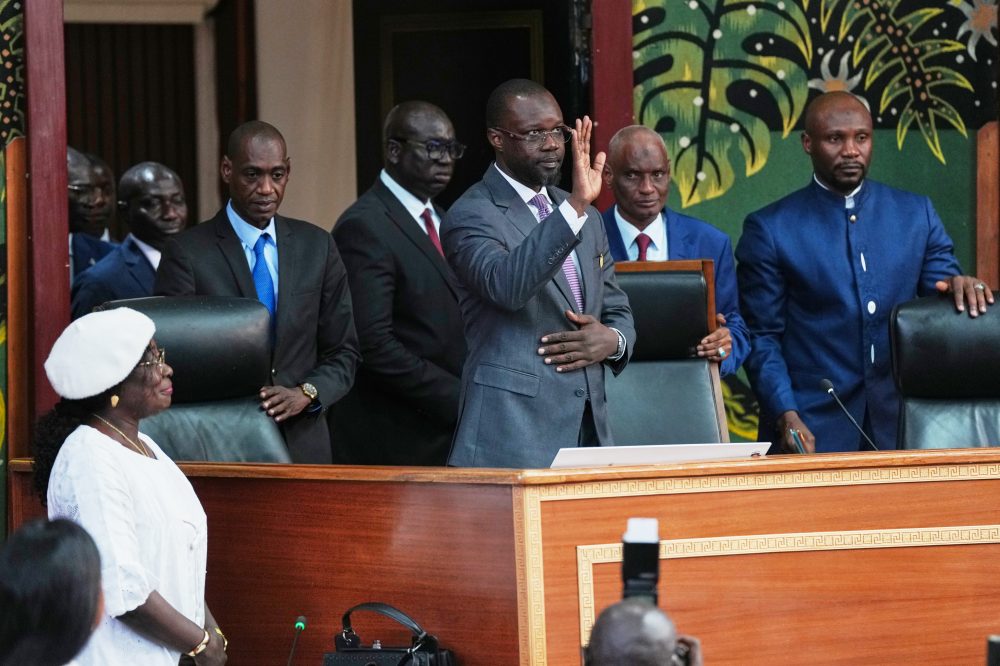
Senegal’s lawmakers defy president and elect ousted Sonko as speaker

DAKAR, Senegal (AP) — Senegal ’s National Assembly elected ousted Prime Minister Ousmane Sonko as parliament speaker Tuesday, defying President Bassirou Diomaye Faye who fired him days earlier and threatening political deadlock in a country already buckling under record debt.

Sonko was sacked alongside all other ministers last week, following months of tensions between him and the president as their powerful partnership that drove them to power crumbled. His firing triggered the resignation of the parliament speaker. Faye named a new prime minister Monday and is expected to announce a new cabinet in the coming days.

Faye and Sonko took office following the March 2024 presidential election, promising to carry out ambitious reforms that included fighting corruption, creating jobs for Senegal’s growing young population and maximizing natural resource benefits.

But the two have openly disagreed on key policies in recent months, including about negotiations for a loan from the International Monetary Fund.

As speaker, Sonko now can shape which laws come to a vote, scrutinize government reforms and introduce legislation — powers that could put him on a collision course with the president he once served, said Babacar Ndiaye, a political analyst at the Senegal-based Wathi think tank.

Sonko said he would not use his role as parliament speaker to settle personal scores with Faye, but promised to hold the government to account and use every constitutional power at his disposal to do so.

Faye and Sonko were former allies from the party known as Pastef, which holds a strong majority in parliament with 130 deputies out of 165. Sonko leads the party and could challenge Faye’s authority.

Senegal meanwhile grapples with a deepening debt crisis and rising cost of living. The country has one of the highest debt-to-GDP ratios in Africa, after a government audit last year revealed a larger-than-reported debt of $13 billion attributed to the previous administration.


Brought to you by www.srnnews.com


U.N.’s Guterres ‘deeply concerned’ by Moscow plan for Kyiv strikes

May 26 (Reuters) – U.N. Secretary-General Antonio Guterres said on Tuesday he was “deeply concerned” by Russia’s announcement that it plans to launch strikes against Ukrainian defense enterprises and decision-making centers in Kyiv.

Guterres made the remarks to the United Nations Security Council after Moscow said on Monday that it intended to mount such strikes, one day after one of its heaviest bombardments of the city since the Russia-Ukraine war began.

Guterres said the Russian announcement followed reports of a Ukrainian drone attack on a college building and dormitory in the Ukrainian city of Starobilsk, presently controlled by Russia.

“We condemned the attack on the school – as we condemn all attacks on civilians and civilian infrastructure, wherever they occur,” he said.

“Now more than ever, it is imperative to avoid any escalation of a conflict that has already exacted a devastating toll on civilians, and that risks making the search for peace even more distant, prolonging the suffering of people,” Guterres added.

(Reporting by David Brunnstrom and Simon Lewis; Editing by Doina Chiacu and Keith Weir)


Brought to you by www.srnnews.com


EU and member states summon Russian envoys after Moscow tells foreigners to leave Kyiv

BRUSSELS, May 26 (Reuters) – Germany, Norway, the Netherlands and the European Union summoned Russian representatives on Tuesday after Russia threatened strikes on targets in Ukraine’s capital Kyiv and urged foreigners, including diplomats, to leave.

Moscow said on Monday that it intended to mount strikes on Ukrainian military targets and decision-making centres in Kyiv, one day after one of its heaviest bombardments of the city since the war began.

The European Union’s diplomatic service summoned Russia’s chargé d’affaires, the bloc’s foreign policy spokesperson said on Tuesday. 

Russia’s “threat to foreign citizens & diplomats to leave Kyiv is an unacceptable escalation”, spokesperson Anitta Hipper said in a post on X, calling for Moscow to “stop hitting civilians”. 

The EU’s delegation is remaining in Kyiv, the spokesperson added. 

Norwegian Foreign Minister Espen Barth Eide said he had summoned Russia’s ambassador Nikolai Korchunov to address “the explicit threats against foreign personnel in Ukraine”.

Sweden on Monday evening summoned the Russian ambassador to “condemn Russia’s false claims of airspace violations in the Nordic-Baltic region and Russia’s threats against Latvia and other countries in the region”.

(Reporting by Lili Bayer, Louise Rasmussen and Linda Pasquini; Writing by Makini Brice; Editing by Sharon Singleton)


Brought to you by www.srnnews.com


NATO to beef up forces assigned to defend Baltics in war, sources say

By Sabine Siebold and Polina Nikolskaya

BERLIN/LONDON, May 26 (Reuters) – NATO will strengthen the defence of its eastern flank with a new structure that would facilitate the rapid deployment of forces in Latvia and Estonia in the event of a war with Russia, two sources familiar with the matter told Reuters.

At present, NATO forces in all three Baltic nations as well as northern Poland come under the command of a single multinational headquarters in the Polish city of Szczecin. The planned change underlines the strategic importance of the Baltics, which have been in focus since Russia’s invasion of Ukraine.

Assigning a second corps for the region will allow NATO to bring in “mass at speed”, as one military official described it, addressing the region’s limited strategic depth and vulnerability. 

When fully operational, an army corps typically commands three divisions, or 40,000 to 60,000 troops. In peacetime, it normally exists as a skeleton command structure, with specialist functions such as artillery, air defence and medics in place to allow rapid deployment of troops when needed.

Germany and the Netherlands, in coordination with NATO, have reached agreement to assign the German-Netherlands Corps, based in the German city of Muenster, to the defence of Latvia and Estonia, the military sources told Reuters on Tuesday.

European allies are assuming more responsibility for their own security, amid fierce criticism from U.S. President Donald Trump who most recently accused European NATO members of a lack of support in the Iran war and announced Washington would withdraw 5,000 U.S. troops from Germany. 

The deal cleared the last hurdle, which consisted of a lack of corps troops, the sources said, alluding to the critical capacity any corps needs in areas such as long-range artillery, air defence, as well as engineers and medics. 

Together with other partners, Germany and the Netherlands will now build up these forces, the sources said.     

It was not immediately clear when the decision would take effect and how many troops would fall under the command of the new headquarters unit in any conflict.

The Dutch defence ministry said assignment of the corps was “currently being further elaborated” and declined to give details. The German defence ministry declined to comment, citing ongoing coordination efforts with NATO.

NATO said it would respond later.

NATO officials have warned for years of an increased threat from Russia, which they say could potentially mount a large-scale assault on allied territory as early as 2029. Moscow denies aggressive intentions and accuses the alliance of stoking tensions by expanding into neighbouring territory.

(Reporting by Sabine Siebold in Berlin, Polina Nikolskaya in London and Anthony Deutsch in AmsterdamEditing by Keith Weir)


Brought to you by www.srnnews.com


Townhall Top of the Hour News

Weather - Sponsored By:

TAYLORVILLE WEATHER

Local News

Facebook